You bite down on a piece of ice or an unpopped popcorn kernel. There’s a small, sharp twinge, then nothing. No swelling, no visible chip, no reason to panic. So you finish your snack and move on with your day. That single moment, and the decision to shrug it off, is the cracked tooth mistake that sends more Dallas patients into emergency root canals and extractions than almost any other dental habit.
It’s an easy mistake to make, because a cracked tooth rarely announces itself the way a cavity or a toothache does. There’s no steady throb to remind you something is wrong. Instead, the damage sits quietly under the enamel, and by the time it does announce itself, the treatment options have usually narrowed. A dental professional can identify signs of a crack before the damage progresses, even when the tooth looks and feels mostly normal.
The Real Mistake Isn’t the Crack- It’s Waiting
Most people don’t ignore a cracked tooth on purpose. They ignore it because it doesn’t look serious. A hairline crack can be invisible to the naked eye, and the discomfort it causes is often inconsistent – sharp when you bite down on that one side, then completely silent for days. That inconsistency is exactly what makes it easy to convince yourself it’s nothing.
What a Cracked Tooth Actually Feels Like
Cracked tooth symptoms tend to be situational rather than constant, which is part of why they get dismissed. Watch for:
- Sharp pain on release – discomfort that hits the moment you stop biting down, not while you’re chewing.
- Sensitivity to hot or cold that comes and goes rather than staying constant.
- Pain isolated to one specific tooth, especially when chewing on that side.
- A rough edge you can feel with your tongue but can’t fully see.
- Occasional swelling near one tooth, even without an obvious injury.
Cracked tooth symptoms tend to be situational rather than constant, which is part of why they get dismissed. Watch for: If you’re noticing a small crack, occasional twinge, or pain that appears only when you bite, learn more about the subtle signs adults often overlook: That Tiny Tooth Crack Adults Ignore – Until Every Bite Starts Hurting.
| Did You Know? Cracked teeth are considered one of the leading causes of adult tooth loss in the U.S., right behind decay and gum disease – largely because the early stages are so easy to miss. |
Why It Matters: A Crack Never Heals Itself
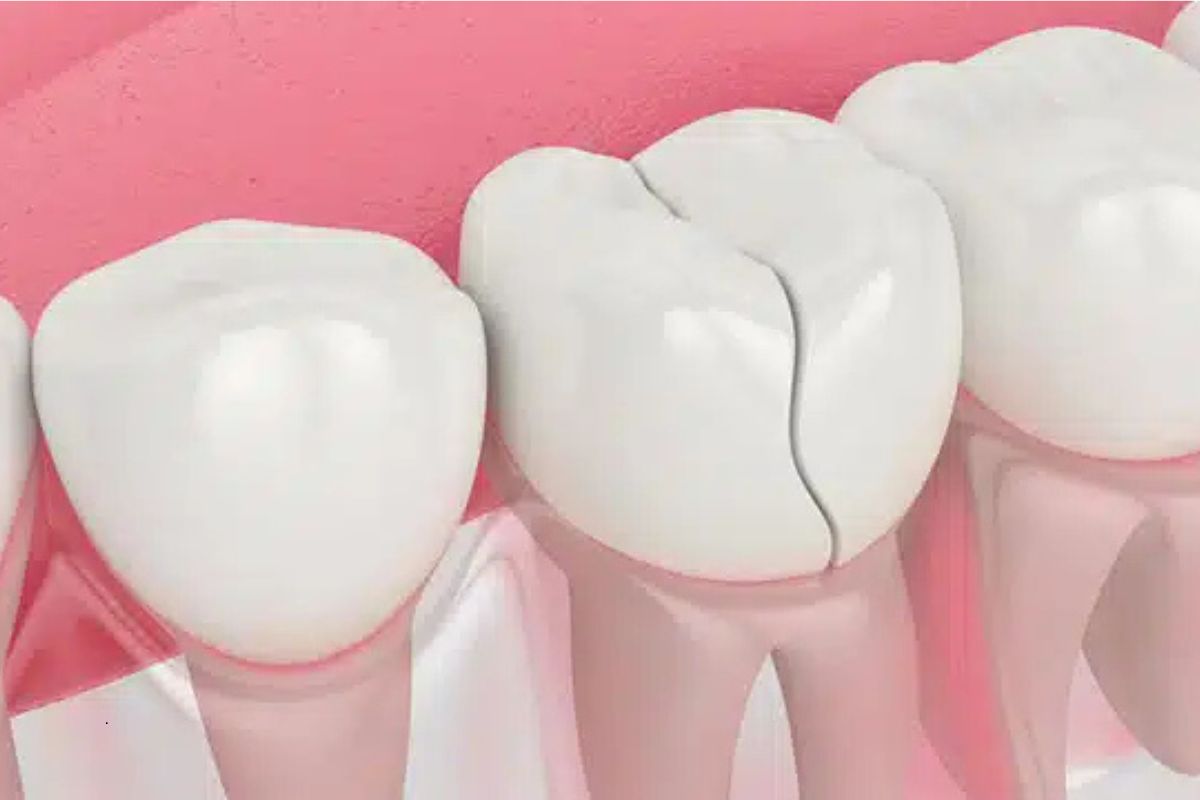
Unlike a broken bone, a cracked tooth cannot repair itself. Enamel has no living cells to regenerate, so once a crack forms, it only responds to two things over time: the forces you put on it every time you chew, and whatever treatment you give it. Left alone, most small cracks slowly work their way deeper toward the nerve.
What Happens If You Ignore a Cracked Tooth
The timeline varies from patient to patient, but the pattern is consistent. A crack that starts in the outer enamel gradually extends toward the dentin, then toward the pulp – the nerve and blood supply at the center of the tooth. Once bacteria reach that inner layer, what began as a minor structural issue becomes an infection.
- Deeper fracture progression, turning a simple repair into a root canal.
- Nerve involvement, which brings the kind of pain that sends people to urgent care.
- Abscess formation, where infection pools at the root tip and can spread to the jaw.
- Bone loss around the root if an infection goes untreated for an extended period.
- Tooth loss, when the crack extends below the gumline and the tooth can no longer be saved.
Cracked Tooth Types: How Serious Is It?
Not every crack carries the same urgency. This quick reference shows how dentists generally classify cracked teeth and what each type typically calls for.
| Crack Type | What It Looks Like | Urgency | Typical Approach |
| Craze lines | Tiny surface lines in enamel only | Low | Monitor; cosmetic polishing if desired |
| Fractured cusp | A piece of the chewing surface breaks off | Moderate | Bonding or a crown |
| Cracked tooth (extends toward root) | Pain on biting/release, sensitivity | High | Crown, sometimes with root canal |
| Split tooth | Crack extends fully through the tooth | Urgent | Extraction often required |
| Vertical root fracture | Crack begins below the gumline | Urgent | Extraction is usually necessary |
Can a Cracked Tooth Be Saved? In Most Cases, Yes
This is the part patients are usually relieved to hear: catching a crack early gives a dentist several ways to stabilize the tooth before it ever reaches the point of extraction. The right cracked tooth treatment depends entirely on how deep the crack runs and whether it has reached the nerve.
Treatment Options, From Least to Most Involved
The right cracked tooth treatment depends entirely on how deep the crack runs and whether it has reached the nerve. Certain warning signs can also indicate that a tooth needs more than a minor repair and may require the protection of a dental crown. Learn more about the signs to watch for in Is Your Tooth About To Break? Warning Signs You May Need A Dental Crown.
- Dental bonding — a tooth-colored resin fills small cracks and craze lines in a single visit.
- A dental crown — the most common fix once a crack affects the chewing surface, covering and protecting the entire tooth from further pressure.
- Root canal therapy plus a crown — used when the crack has reached the nerve, removing the source of infection before the tooth is capped.
- Extraction — reserved for teeth where the crack has split the root or extends below the gumline, where saving the natural tooth is no longer realistic.
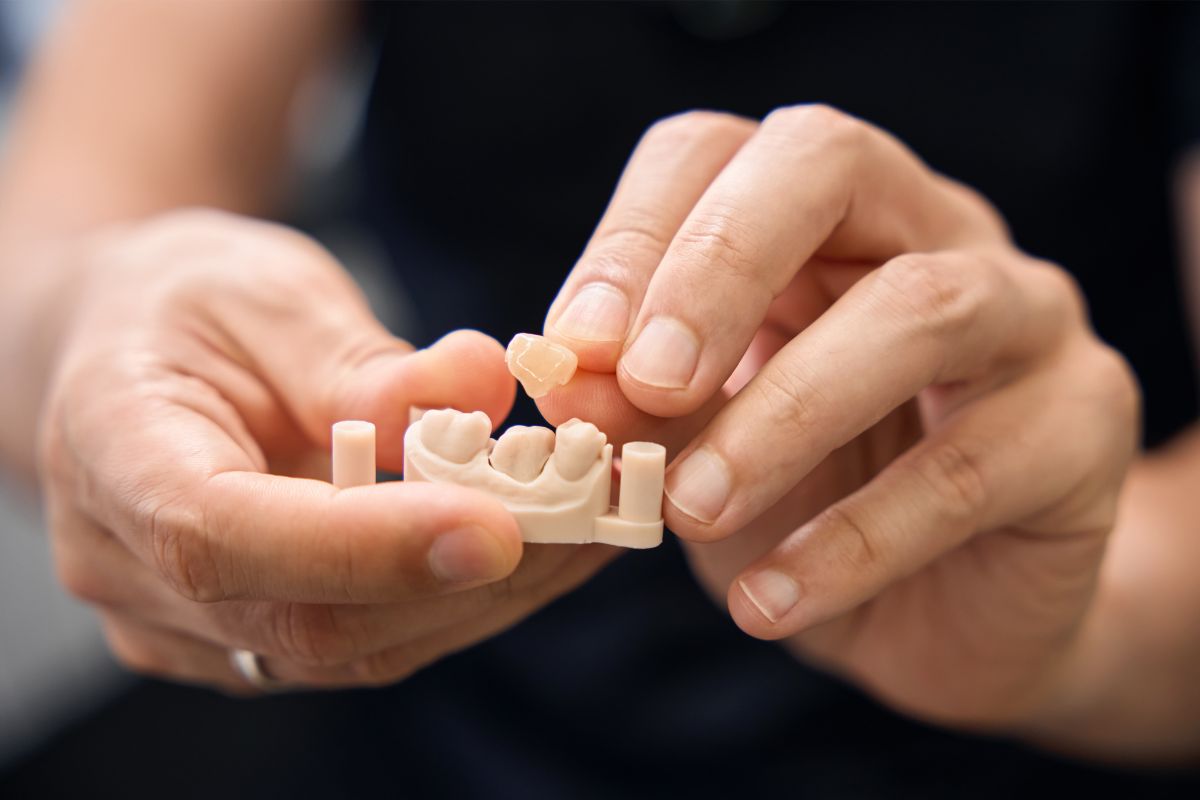
A crown is often the deciding factor between saving a cracked tooth and losing it. By covering the tooth completely, a crown redistributes the biting force that caused the crack in the first place. At SK2 Dental, patients may also benefit from same-day dental crown treatment, allowing a damaged tooth to be restored and protected in a single visit when appropriate. This is why so many cracked tooth cases can be treated with restorative dentistry rather than extraction — provided the tooth is evaluated before the crack spreads further.
Local Authority: Why Timing Matters in Dallas
At SK2 Dental, our Walnut Street office in North Dallas has been evaluating cracked teeth for families across the area since 2004, and the pattern holds true year after year: the patients who come in within the first few days after a crack almost always have more treatment options than the ones who wait weeks hoping the discomfort will resolve on its own.
Dallas summers bring their own risk factors – iced tea, sports drinks, and ice-chewing habits that put extra stress on enamel already worn down by clenching or grinding. Combined with a fast-paced schedule that makes it tempting to put off a dental visit, that’s often the exact combination that turns a minor crack into a split tooth.
⭐⭐⭐⭐⭐ Zangapassion Care
I have been coming to Sk2 for years now. And to honesty I wouldn’t change my doctor for any other density. Dr Stanley is the best patient and good with his job. Not forgetting Gina she cleans my teeth well she’s polite and professional.
Overall everyone at this office is amazing. My favorite place to have my teeth done.
Meet Your Dentist

Dr. Stanley Ngo and the team at SK2 Dental have been treating families in North Dallas since 2004, with a particular focus on catching restorative issues- like cracked teeth – before they turn into emergencies. Same-day crown technology allows many cracked tooth cases to be fully restored in a single visit. Schedule an appointment to meet Dr. Ngo and learn more about your treatment options, or see what our patients say on Google reviews.
| Not Sure If Your Tooth Can Still Be Saved? A same-day evaluation can tell you exactly how serious the crack is and whether a crown, root canal, or simple bonding is enough to protect it. Don’t wait for the pain to make the decision for you. Call us now to book your appointment! |
Frequently Asked Questions
1. Can a cracked tooth heal on its own?
No. Enamel doesn’t regenerate, so a cracked tooth will not heal without treatment. It can, however, stay stable for a while depending on the depth of the crack — which is why an evaluation matters even if the pain comes and goes.
2. How do I know if my tooth is cracked or just sensitive?
General sensitivity tends to be spread across several teeth and triggered consistently by hot or cold. A cracked tooth usually causes sharp, localized pain in one specific tooth, often right when you release a bite rather than during it.
3. What happens if a cracked tooth is left untreated for months?
The crack typically extends deeper toward the nerve, increasing the risk of infection, abscess, and eventually the need for extraction rather than a simpler restorative fix.
4. Is a cracked tooth a dental emergency?
It depends on the symptoms. Sharp pain when biting down, swelling, or a visible fragment missing from the tooth are all reasons to be seen quickly rather than waiting for a routine cleaning.
5. Does a cracked tooth always need a root canal?
Not always. If the crack hasn’t reached the nerve, a crown or bonding may be enough. Root canal therapy becomes necessary once the crack allows bacteria to reach the pulp.
6. Can a crown fix a cracked tooth permanently?
A crown can protect a cracked tooth for many years by redistributing chewing pressure evenly across the surface, though how long it lasts depends on the depth of the original crack and daily habits like grinding.
7. Why did my tooth crack if I don’t chew ice or hard foods?
Cracks can also develop from nighttime grinding, old large fillings that weaken the surrounding tooth structure, age-related wear, or a past injury that didn’t cause pain right away.
8. Should I see a dentist even if the pain has stopped?
Yes. Pain that comes and goes is common with cracked teeth and doesn’t mean the crack has resolved — it often means it’s between flare-ups while continuing to spread underneath.