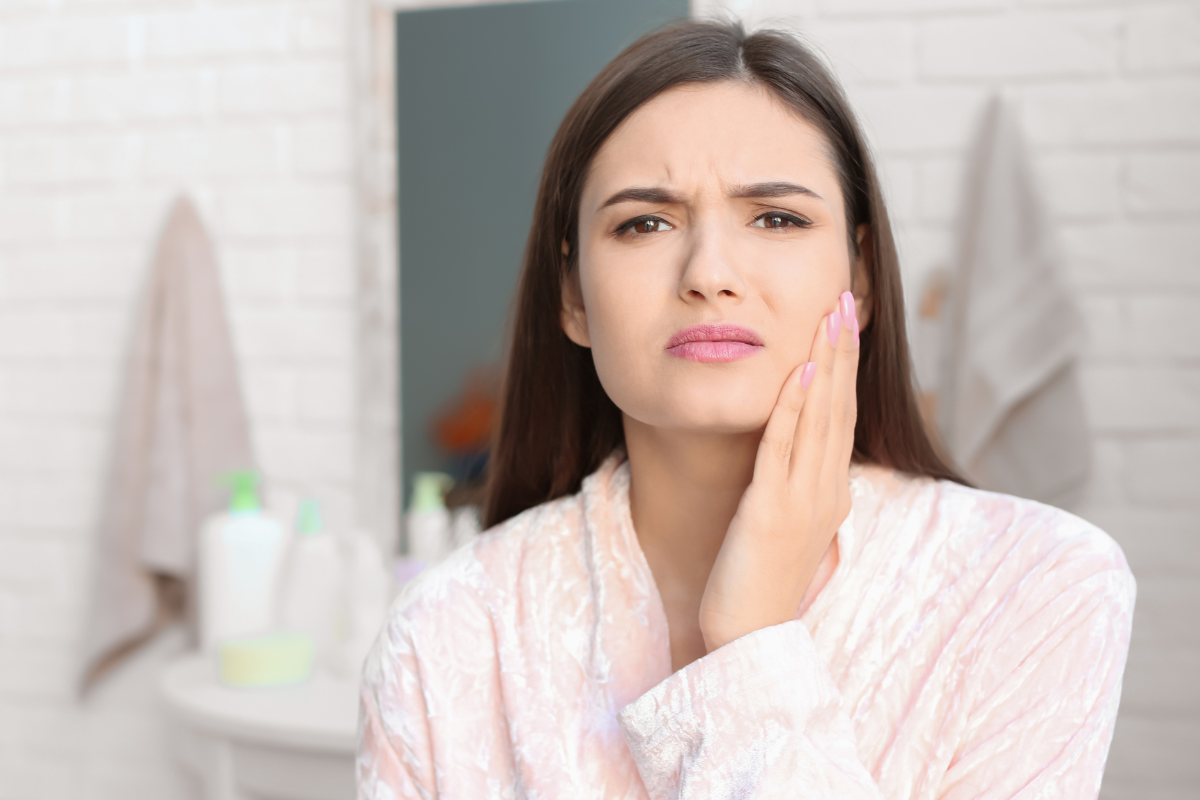
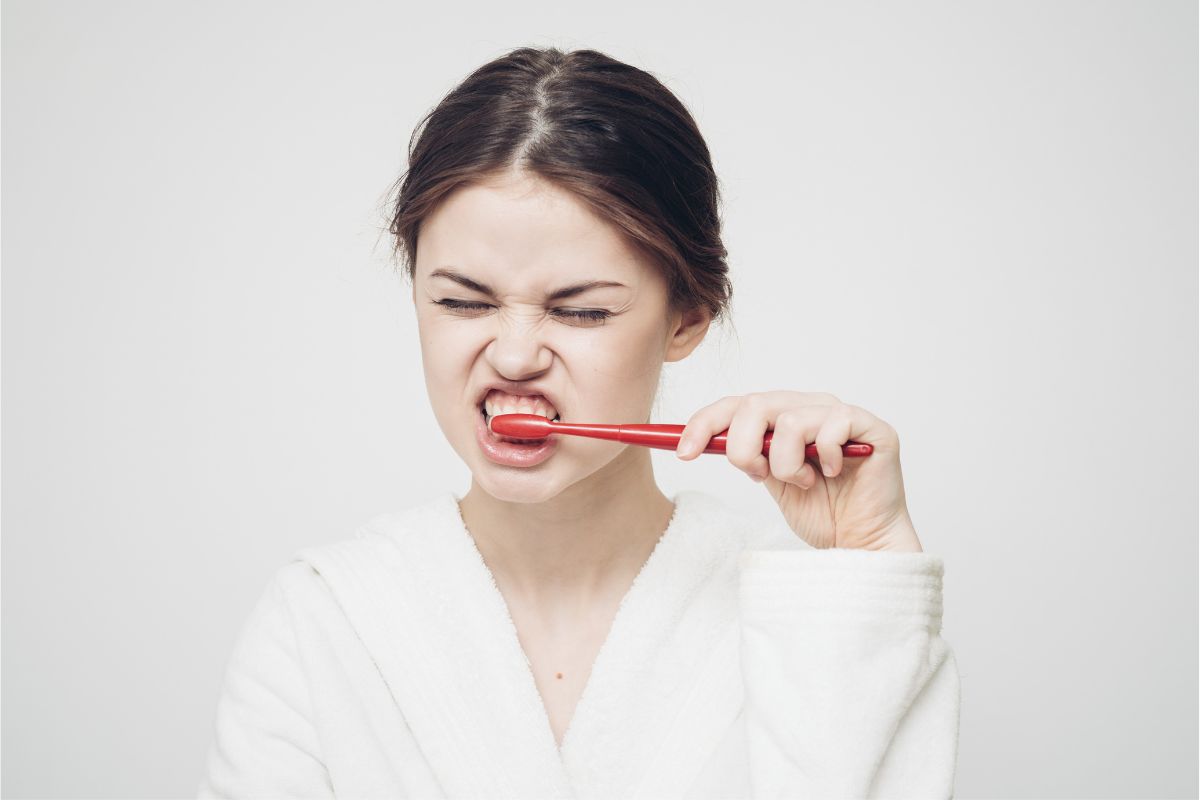
You finished your whitening treatment and expected a bright, even smile. Instead, one tooth zings when you sip cold water. A yellow band shows up near the gums. Another tooth looks darker than its neighbors.
So, can brushing too hard damage teeth? Yes, it can, and whitening is often the thing that finally reveals it.
Don’t panic. Most of the time, the whitening did not go wrong. It simply lit up wear that was already there. If you live in Dallas and take pride in your oral hygiene, your careful routine could be the cause. This guide explains what is happening and how to fix it.
Can Brushing Too Hard Damage Teeth? The Short Answer
Yes. Brushing too hard, or with a stiff brush, can wear away tooth enamel and push gum tissue back over time. Dentists call this toothbrush abrasion. It builds slowly, often with no pain at first, and it can lead to sensitivity, exposed roots, and a darker, uneven smile appearance.
Common signs you may be brushing too hard:
- Bristles that look bent or flared out after just a few weeks
- Gums that seem to be pulling away from your teeth
- Small notches or grooves near the gumline
- Sensitivity to cold air, ice water, or sweets
- A yellow tint near the gums, even after whitening
What Is Toothbrush Abrasion?
Enamel is the hard outer shell of your tooth. It is the strongest substance in your body, but once it wears away, it does not grow back. Your gums are much softer. When you scrub with heavy pressure, you slowly scrape both.
Think of sanding a wooden table. One pass does nothing. Thousands of passes change the surface. Brushing works the same way. Scrubbing side to side along the gumline is the most common culprit, and gritty toothpaste can add to the wear when it is paired with firm pressure.
Why Whitening Can Make It Show Up
Teeth whitening gel works on enamel. Under the enamel sits dentin, a layer that is naturally more yellow and more sensitive. Where enamel has thinned, dentin can show through. Whitening may not change that yellow tone much, so you end up with bright teeth and a darker band at the edge.
Whitening can also make worn spots feel more sensitive for a few days, because the gel reaches nerve-rich areas more easily. In other words, the treatment did not create the problem. It exposed it.
| Did You Know? Enamel has no living cells, so your body cannot rebuild it once it is gone. Gum tissue that has receded does not grow back on its own, either. That is why catching brushing damage early matters so much. |
Why That Surprising Whitening Result Matters
An odd result after whitening is more than a cosmetic annoyance. It is information about your oral health. Here are three common surprises.
Sharp Zings When You Sip Something Cold
Mild sensitivity for a day or two after whitening is common. But if the same tooth keeps zinging, or the sensitivity lingers, it may point to worn enamel or exposed dentin. It can also signal a cavity or a small crack, so it is worth getting checked rather than guessing.
A Yellow or Gray Band Near the Gumline
This often means enamel is thin there, or that the gum has moved back and exposed the root surface. Root surfaces do not respond to whitening the way enamel does. Extra whitening will not fix this, and it may make sensitivity worse.
Patchy or Uneven Color
Worn areas take whitening unevenly. Also, fillings, dental crowns, and veneers do not whiten at all. When your natural teeth get lighter, those restorations can suddenly look darker or mismatched. If your gums have receded, the edges of a crown may show, too.
Quick reference: what your symptom may mean
| What You Notice | Possible Brushing Cause | Other Possible Causes | Best Next Step |
|---|---|---|---|
| Sharp zing with cold or sweets | Enamel wear or exposed dentin | Normal short-term whitening sensitivity, tooth decay, a cracked tooth | Book an exam if it lingers |
| Yellow band at the gumline | Thin enamel near the gums, exposed root | Plaque buildup, old stains | Exam before any more whitening |
| Teeth look longer, gums look lower | Receding gums from brushing | Gum disease, grinding, tooth position | Full gum evaluation |
| Small notch at the gumline | Toothbrush abrasion | Grinding forces, acid erosion | Ask about bonding to protect it |
| Flat, dull, or shiny worn spots | Enamel wear from brushing | Acidic drinks, acid reflux, grinding | Review habits, diet, and bite |
The Real Risks of Brushing Teeth Too Hard
Enamel Wear That Cannot Be Reversed
Enamel wear from brushing is permanent. Fluoride can strengthen softened enamel, but it cannot put back what has been scrubbed away. Over time, thin enamel makes teeth more sensitive and more likely to chip.
Receding Gums From Brushing
Heavy pressure can irritate gum tissue and push it back. Once the gum moves, the root is exposed. Gum recession can also come from gum disease, so a dentist needs to tell the two apart. The treatment is very different.
Higher Risk of Tooth Decay at the Root
Roots do not have a hard enamel shield. That makes them softer and quicker to decay. A cavity on the root can move fast. Advanced wear may call for fillings, crowns, or other restorative dentistry, so catching it early means a simpler fix.
Sensitivity That Gets in the Way of Daily Life
Cold coffee, ice cream, or even a chilly breeze can start to hurt. Many people then brush less on the sensitive side, which lets plaque build up and puts gum health at risk.
How a Dentist Finds the Cause and Fixes It
Guessing at home can send you in the wrong direction. Sensitivity, color changes, and receding gums can come from several things, including gum disease, teeth grinding, acidic foods, and cavities. A dental exam sorts it out.
What Happens at the Visit
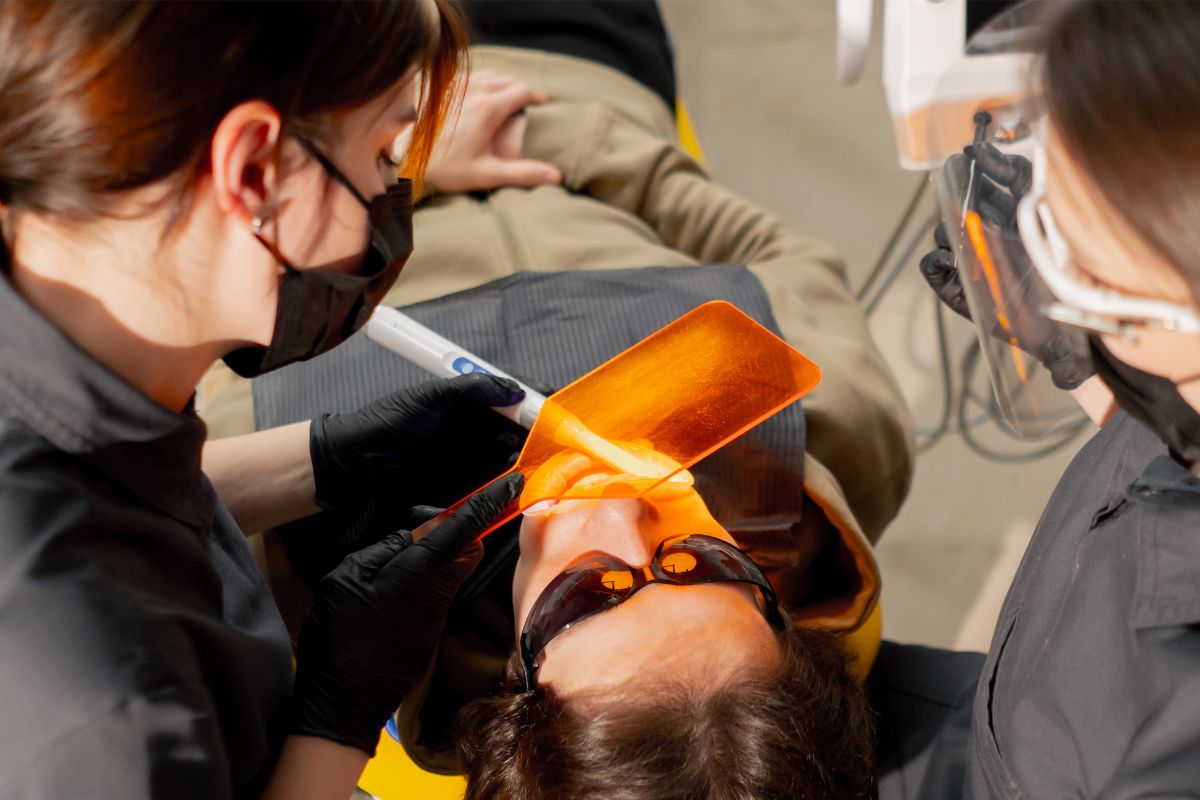
Your dentist will look closely at your enamel, gumline, fillings, and crowns. Digital X-rays may be used to check for decay or bone changes. They will also check your bite alignment, since clenching and grinding can add to the wear. Your dentist may also watch how you brush, since small technique changes help.
Treatment Options That May Help
The right plan depends on what is found. Options may include:
- Desensitizing treatments to calm sensitive areas
- Bonding to cover and protect worn notches near the gumline
- A custom night guard if grinding is adding to the damage
- A gum health evaluation if recession is progressing
- Restorative dentistry when wear is more advanced
Brushing Habits to Change Today
- Switch to a soft-bristled brush. Hard bristles do not clean better. They only wear more.
- Use light pressure. Hold the brush like a pencil, not a hammer.
- Brush in small circles. Skip the hard back-and-forth scrubbing.
- Replace your brush every three months. Frayed bristles are rough on gums.
- Wait about 30 minutes after acidic foods or drinks. Softened enamel wears faster.
- Try a pressure-sensor electric brush. Many will alert you when you press too hard.
Why Dallas Patients Trust SK2 Dental
SK2 Dental has cared for families across Dallas and nearby neighborhoods like Richardson, Garland, and Lake Highlands since 2004. Our office on Walnut Street has free parking, which makes a quick check-up easier to fit into a busy week.
When a patient comes in with sensitivity or an unexpected whitening result, we look at enamel, gums, bite alignment, and brushing habits together. See what our patients say on Google reviews.
| Noticing something odd after whitening? Let’s find out why. A short exam can show whether it is brushing, gum health, or something else. Catching wear early can protect your enamel and help you avoid bigger repairs later. Schedule a consultation with Dr. Ngo at SK2 Dental! |
Frequently Asked Questions
1. How do I know if I’m brushing too hard?
Look at your brush and your gums. Bristles that flare out in a few weeks are a red flag. So are receding gums, small notches near the gumline, and sensitivity. A dentist can confirm it during an exam.
2. Can brushing too hard cause receding gums?
It can contribute. Heavy pressure and hard bristles can irritate gum tissue and push it back over time. But gum disease, grinding, and tooth position can cause recession too. A gum evaluation shows which cause is behind it, so you can treat the right problem.
3. Can enamel grow back after brushing too hard?
No. Once enamel is gone, the body cannot regrow it. Fluoride can help strengthen enamel that is only softened, and bonding can protect worn spots. The best step is to stop the wear and get a dentist’s advice on protecting what remains.
4. Why are my teeth sensitive after whitening?
Whitening gel can briefly irritate the nerves inside the tooth, so a day or two of sensitivity is common. If one tooth stays sensitive, or the zings last longer than expected, it may be worn enamel, exposed roots, or decay. Get it checked.
5. Is a hard or soft toothbrush better?
Soft is better for most people. Hard bristles do not clean more effectively. They only increase the risk of enamel wear and gum irritation.
6. Can an electric toothbrush damage teeth?
Any brush can if you press too hard. Electric brushes do the work for you, so very light pressure is enough. Many include a sensor that warns you when you press too firmly.
7. Can brushing too hard make teeth look yellow?
It can. Wear thins the enamel, and the yellower dentin underneath starts to show, especially near the gums. That is why the color can look more noticeable after whitening. A dentist can tell you whether wear, stains, or something else is behind it.
8. How do I fix teeth worn down from brushing?
Treatment depends on how much wear there is. Mild cases may need desensitizing products and better brushing habits. Worn notches can often be covered with bonding. More advanced wear may call for restorative dentistry. A dental exam is the first step.