You Don’t Have to Feel a Cavity for It to Be There
You bite into an apple. Nothing hurts.
You drink something cold. No sharp twinge.
You look in the mirror, and your teeth seem perfectly normal.
So why would your dentist tell you there is an area of early tooth decay?
It can feel surprising, but cavities do not usually begin with pain. In fact, tooth decay can develop quietly for some time before you notice sensitivity, a toothache, or a visible hole.
That is why cavity detection during routine dental exams matters. A dentist may notice changes to your enamel or identify decay in places you simply cannot see yourself.
And that raises an important question:
Can a dentist actually spot a cavity before it starts hurting?
Yes — sometimes much earlier than you might expect.
What Is Cavity Detection?
Cavity detection is the process of identifying early or established tooth decay through a combination of a visual dental examination, clinical findings, your dental history, risk assessment, and, when appropriate, dental X-rays or other diagnostic methods. Early decay may not cause pain, which is why professional examinations can identify problems before symptoms become obvious.
The important word here is early.
Tooth decay is a process rather than something that suddenly appears overnight. Bacteria use sugars and starches to produce acids that repeatedly attack enamel. Over time, minerals are lost from the tooth.
At the earliest stage, this mineral loss may appear as a white spot. If the process continues, the enamel can weaken and eventually form a cavity.
That means there can be a significant gap between:
“Something is starting to happen”
and
“My tooth hurts.”
Myth #1: “If My Tooth Doesn’t Hurt, I Don’t Have a Cavity”
This is one of the most common misunderstandings about tooth decay.
Early cavities often have no symptoms.
You may not experience:
- Tooth pain
- Cold sensitivity
- Sweet sensitivity
- Pain when chewing
- A visible hole
- Any noticeable change at all
NIDCR notes that early tooth decay typically does not cause symptoms. As decay progresses, however, it can lead to toothache or sensitivity to hot, cold, or sweet foods and drinks.
So if you wait until a cavity hurts before getting it checked, the decay may already be more advanced.
A simple way to think about it:
| Stage | What may be happening | What you may notice |
| Early mineral loss | Enamel is losing minerals | Often nothing |
| Early lesion | Changes may develop in enamel | Possibly a white or discolored area |
| Established cavity | Tooth structure has broken down | May still have no pain |
| Advanced decay | Deeper tooth structures become involved | Sensitivity or pain may develop |
| Infection | Decay reaches deeper tissues | Significant pain, swelling, or infection can occur |
Not every cavity follows exactly the same timeline, but the general pattern explains why pain is not a reliable early-warning system.
Myth #2: “I Can See a Cavity in the Mirror”
Sometimes you can.
But sometimes you cannot.
A cavity on an easily visible surface may eventually create a noticeable dark spot, discoloration, or hole. Other areas are much harder to inspect at home.
For example, decay can develop:
- Between two teeth
- Around existing dental work
- In grooves on back teeth
- Near the gumline
- In areas that are difficult to clean
- On exposed root surfaces
A dental examination gives a dentist access to areas that are difficult to evaluate in a bathroom mirror.
Dental X-rays can also help identify decay that is not visible during a regular visual examination. The ADA notes that radiographs may help dentists diagnose disease or damage that cannot be seen during a standard clinical examination, with the need for imaging determined according to individual patient factors.
How Can a Dentist Detect a Cavity Before It Hurts?
Cavity detection is not based on one single test.
A dentist considers several pieces of information together.
1. Visual Examination
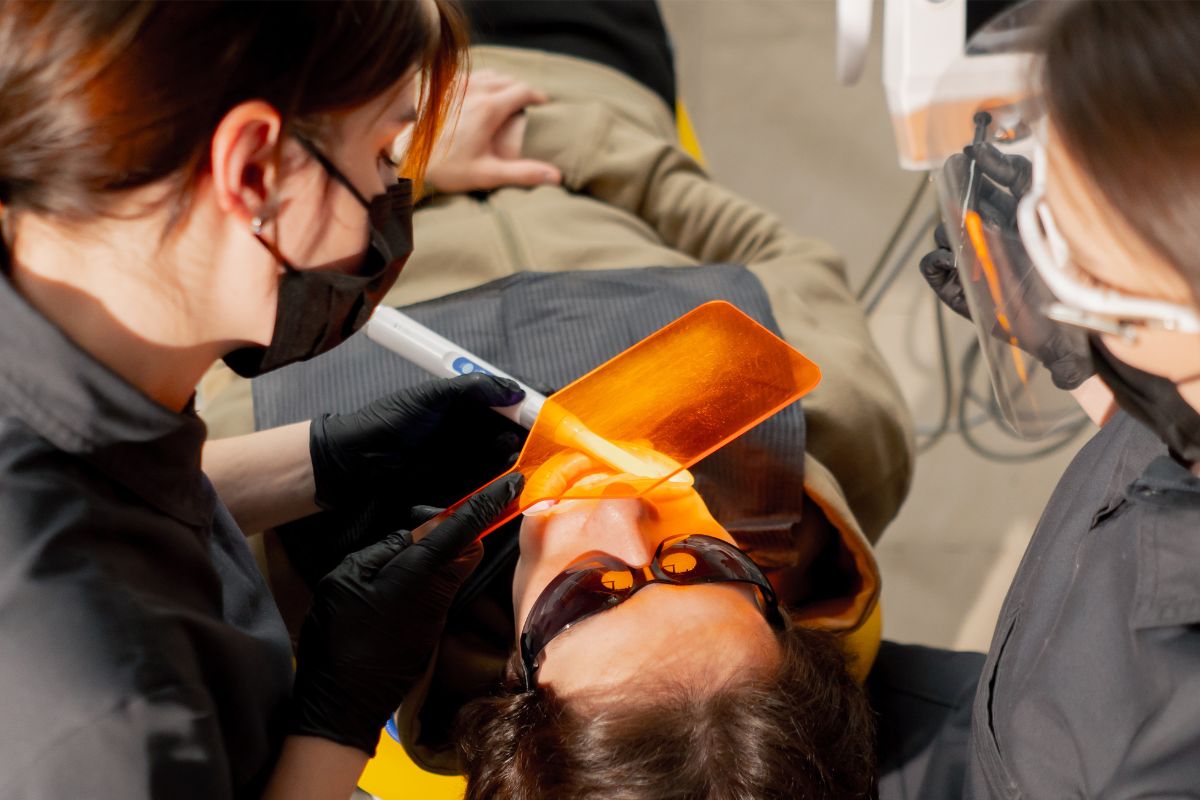
Your dentist examines the teeth under appropriate lighting and looks for changes in the enamel, discoloration, surface irregularities, and other signs of decay.
Early lesions may look different from fully developed cavities.
The ADA describes visual clinical examination as an important part of detecting obvious caries and recognizes systems that help clinicians identify and stage early lesions.
2. Checking Tooth Surfaces
Certain areas of a tooth can show changes in texture or structure associated with decay.
Your dental professional may carefully evaluate suspicious areas rather than relying solely on what you can see.
Modern cavity detection focuses on identifying disease without unnecessarily damaging healthy enamel.
3. Dental X-Rays When Appropriate
Some decay is simply easier to identify with dental imaging.
This is particularly important when the suspected decay is between teeth or in an area that cannot be fully evaluated visually.
However, that does not mean everyone needs an X-ray at every appointment.
The ADA’s current recommendations emphasize individualized decisions based on factors such as age, oral health, disease risk, and symptoms rather than using one fixed schedule for everyone.
4. Your Dental History and Risk Factors
Your dentist also looks at the bigger picture.
Two people can have completely different cavity risks even if they brush and floss similarly.
Factors that can influence risk include:
- Previous cavities
- Frequent exposure to sugary foods and drinks
- Oral hygiene habits
- Fluoride exposure
- Dry mouth
- Gum recession
- Existing dental restorations
- Age
- Certain medications or health circumstances
That is why good cavity detection is more than simply looking for a hole.
Can Early Tooth Decay Be Reversed?
This is where timing really matters.
The earliest stage of tooth decay may be stopped or reversed before an actual cavity forms.
When enamel loses minerals, saliva and fluoride can help replace some of those minerals. If mineral loss continues beyond the tooth’s ability to repair itself, the enamel can eventually break down and form a cavity.
Once a true cavity has formed, however, the damaged tooth structure does not simply grow back.
That distinction is important:
Early mineral loss ≠ established cavity.
A dental professional can determine what stage a suspicious area appears to be in and recommend an appropriate approach.
Depending on the situation, that may involve monitoring, preventive strategies, fluoride, improved oral hygiene, dietary changes, or restorative treatment.
Why Waiting for Pain Can Backfire
Imagine two patients.
Patient A discovers a small area of early decay during a routine dental examination.
Patient B waits several months because nothing hurts. Eventually, the tooth becomes sensitive to cold and painful when chewing.
These patients may have started with similar problems, but the amount of tooth structure involved may be very different.
Untreated tooth decay can progress from enamel into deeper parts of the tooth. Advanced decay can eventually cause pain, infection, and even tooth loss.
Tooth problems don’t always announce themselves with immediate pain. A cracked tooth can also worsen gradually, which is why recognizing subtle changes and getting them evaluated early matters. Read “The Cracked Tooth Mistake That Could Cost You the Whole Tooth” to learn what can happen when a small dental problem is ignored.
This is one reason preventive dentistry is not simply about getting your teeth cleaned.
It is also about finding changes while they are still manageable.
5 Signs You Shouldn’t Ignore Even If You Don’t Have a Toothache
Pain is not required for you to schedule an examination.
Pay attention if you notice:
- A new white, brown, or dark spot on a tooth
- Food repeatedly getting trapped in the same area
- New sensitivity to cold, sweets, or hot foods
- A rough or unusual area on a tooth
- A change around an existing filling or restoration
A change in how your teeth come together is another detail worth mentioning to your dentist. A different bite can have several possible causes and doesn’t necessarily mean you have tooth decay. If your bite suddenly feels unusual, see “Why Does Your Bite Suddenly Feel Different? What It Means for Dallas Smiles” for a closer look at what that change may mean.
These signs do not automatically mean you have a cavity. Sensitivity, for example, can have several causes.
But they are worth discussing with a dental professional rather than trying to diagnose yourself.
Myth #3: “Good Brushing Means I Can’t Get Cavities”
Good oral hygiene is one of the most important defenses against tooth decay.
But it does not make someone completely immune to cavities.
Even people who brush twice a day can develop decay, particularly in areas that are difficult to clean or when other risk factors are present.
NIDCR recommends brushing with fluoride toothpaste, cleaning between the teeth, making thoughtful food choices, and maintaining regular dental visits as part of preventing tooth decay.
Think of home care and professional dental visits as two parts of the same system.
Your toothbrush handles the daily work. Your dental team helps identify problems you cannot see or measure yourself.
What Happens During a Professional Cavity Check?
A typical dental evaluation may involve several steps:
Step 1: Review Your Oral Health
Your dentist may ask about sensitivity, previous cavities, oral hygiene, diet, medications, dry mouth, and other relevant factors.
Step 2: Examine Your Teeth
The dentist evaluates the teeth and surrounding tissues for visible signs of decay and other oral health concerns.
Step 3: Evaluate High-Risk Areas
Back teeth, grooves, spaces between teeth, gumline areas, and previous restorations may receive particular attention.
Step 4: Use Imaging When Indicated
If an area cannot be adequately evaluated clinically or there is a reason to investigate further, dental X-rays may be recommended.
Step 5: Explain What the Finding Means
This step matters.
A good dental visit should not leave you wondering, “So, what exactly is wrong with my tooth?”
Your dentist can explain whether an area appears healthy, needs monitoring, shows early decay, or requires treatment.
What Makes Early Cavity Detection So Valuable?
The biggest advantage is not simply avoiding pain.
It is gaining information earlier.
Early detection can help your dental professional:
- Identify developing tooth decay
- Monitor suspicious areas
- Reinforce preventive habits
- Consider fluoride-based prevention when appropriate
- Determine whether restorative treatment is necessary
- Reduce the chance of allowing untreated decay to progress
Once decay forms a cavity, treatment may require removal of the damaged tooth structure and placement of a filling. More extensive breakdown may require other restorative approaches, such as a dental crown.
The earlier the problem is identified, the more clearly your dentist can determine what needs to happen next.
Dallas Patients: Why Routine Dental Exams Still Matter
Life in Dallas moves quickly. Work, school, family commitments, travel, and everything in between can make dental appointments easy to postpone especially when nothing hurts.
But preventive visits are designed around exactly that situation.
At SK2 Dental – Ngo Stanley DDS, PA, preventive care includes routine examinations and a focus on early detection of dental problems. The practice has served the Dallas community since 2004 and provides comprehensive care ranging from preventive and restorative dentistry to cosmetic treatments and dental implants.
For someone searching for a dentist in Dallas, the goal should not simply be to find treatment after a tooth starts hurting. It is also to have a dental team that can help you understand what is happening with your oral health before small concerns become larger ones. Call us to schedule an appointment!
Don’t Wait for a Toothache to Tell You Something Is Wrong
A cavity does not have to hurt before it deserves attention.
In fact, one of the most useful things about routine dental care is that it can uncover problems during the quiet stage — when you may still feel completely normal.
If it has been a while since your last dental examination, or you have noticed a new spot, sensitivity, or change in a tooth, consider having it evaluated rather than waiting for pain to make the decision for you.
At SK2 Dental in Dallas, the dental team provides preventive and comprehensive dental care designed to identify oral health concerns and explain your options clearly.
Schedule an appointment to learn what is happening with your teeth before a small concern has the opportunity to become a bigger one.
Frequently Asked Questions
1. Can a dentist find a cavity before it starts hurting?
Yes. Early tooth decay often has no symptoms. A dentist may identify changes during a visual examination, assess suspicious areas, and use dental X-rays when appropriate to detect decay that may not be visible. Early detection can help determine whether the area can be managed preventively or needs restorative treatment.
2. How early can a dentist detect a cavity?
A dentist may identify tooth decay during its early stages, sometimes before a visible hole or pain develops. Early enamel mineral loss can appear as a white spot or other subtle change. At this stage, decay may sometimes be stopped or reversed with appropriate preventive care.
3. Can you have a cavity without any pain?
Yes. Many early cavities cause no pain or noticeable symptoms. Pain and sensitivity can develop as decay progresses deeper into the tooth, which is why waiting for a toothache is not a reliable way to detect tooth decay.
4. Can dental X-rays detect cavities you can’t see?
Yes. Dental X-rays can help dentists identify decay that may not be visible during a regular examination, including some decay between teeth. X-rays are not automatically needed at every visit; dentists consider factors such as age, oral health, disease risk, and symptoms when deciding whether imaging is appropriate.
5. Can an early cavity heal on its own?
Very early tooth decay involving mineral loss may sometimes be stopped or reversed before a true cavity forms. Saliva and fluoride can help restore minerals to enamel. Once a cavity has formed and tooth structure has been permanently damaged, restorative treatment may be necessary.
6. What does an early cavity look like?
Early tooth decay may appear as a white spot caused by mineral loss from enamel. As decay progresses, discoloration or an actual hole may develop. However, some decay occurs in areas that are difficult to see, so a professional dental examination is more reliable than checking your teeth in a mirror.
7. How often should I get checked for cavities?
The appropriate dental visit schedule depends on your individual oral health and cavity risk. People with a history of decay or other risk factors may need more frequent monitoring, while others may have different intervals. Your dentist can recommend a schedule based on your specific needs.
8. Should I see a dentist if I have no tooth pain?
Yes. Routine dental examinations are important even when your teeth feel normal because early tooth decay and other oral health problems may not cause symptoms. Regular visits can help identify changes before they become more advanced or uncomfortable.